"Keep your Eyes Open"
Depression nearly took me. Instead, it built me.
My story of how I overcame depression and suicide to build a pathway to help others not walk where I walked and to help others recognise and help those who are struggling.
Dean Ainsworth
6/9/202620 min read
Depression Nearly Took Me. Instead, It Built Me.
The story behind Open Eyes — and why I couldn't stay quiet any longer.
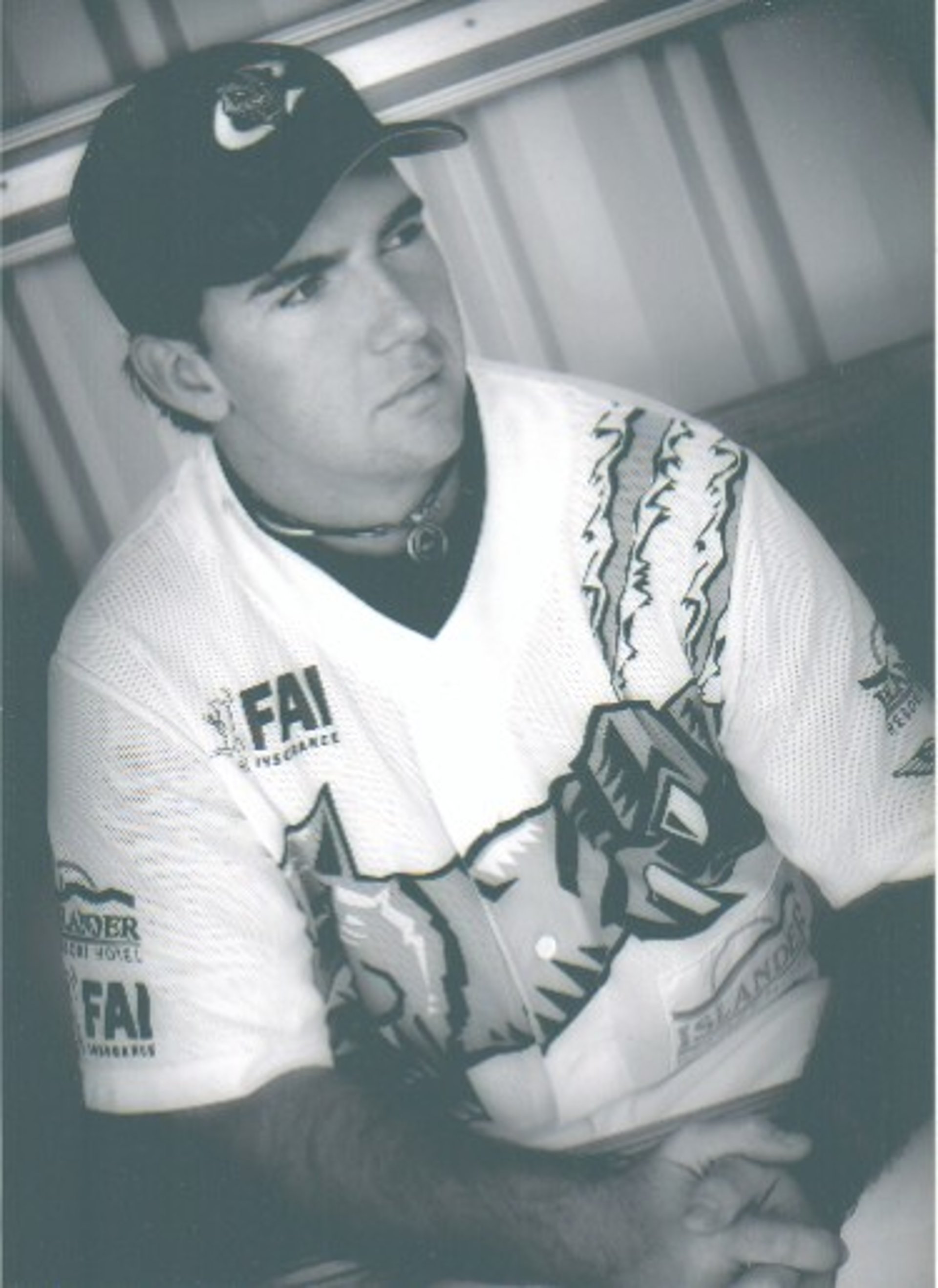
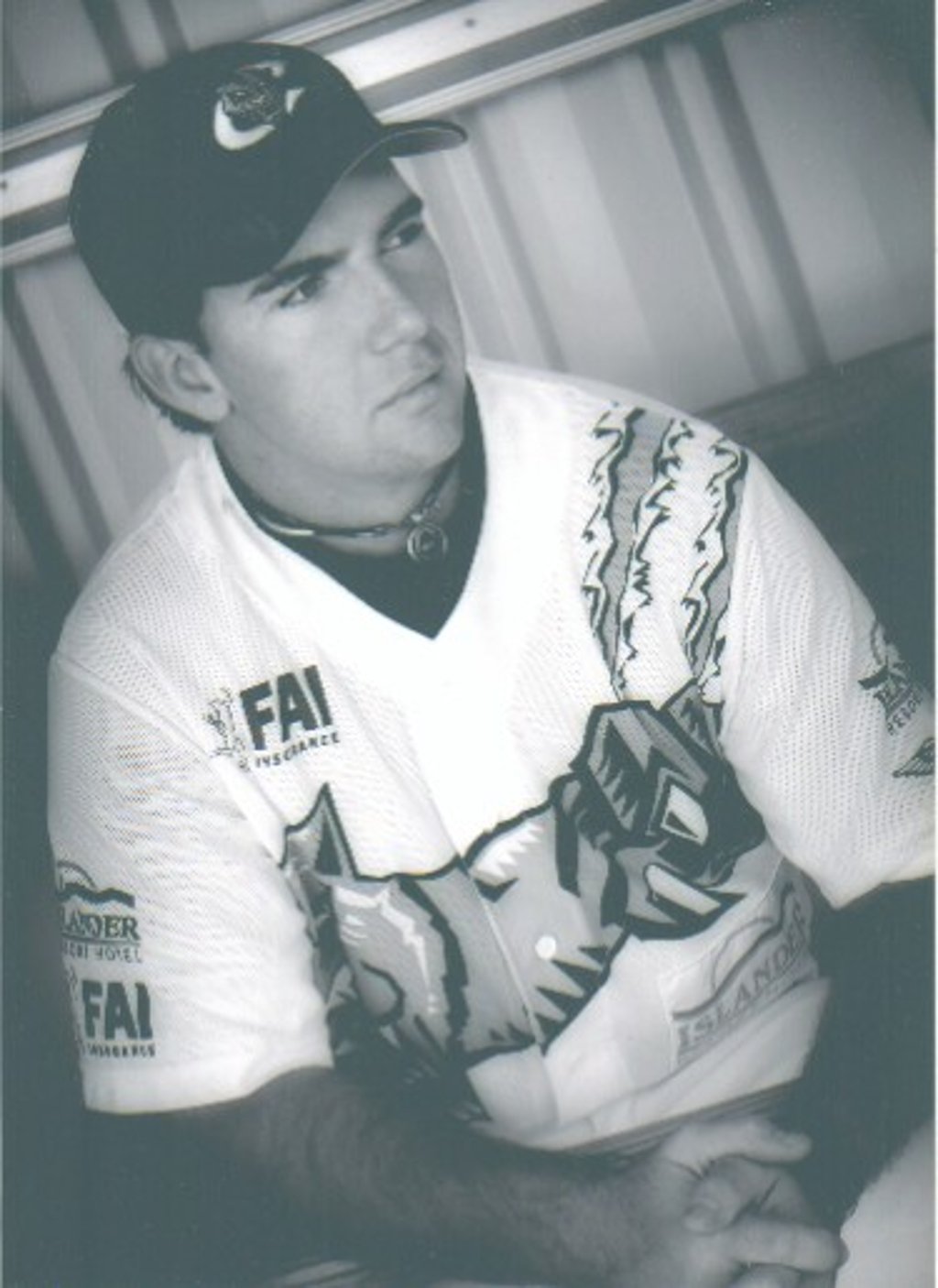
There's a photo of me at twenty years old. I'm wearing the jersey that represented the pinnacle of my sporting career, the highest level I had ever reached in the game I'd dedicated my life to. By all accounts, it should have been the best time of my life.
But if you look closely at that photo, the photographer caught something else entirely. A blank stare. Uncertainty. A kid with absolutely no idea what the future held.
And honestly? Whether he even wanted a future at all.
That was me. Twenty years old. Depressed. Lost. With thoughts of suicide running through my head on a regular basis. Wearing a jersey that was supposed to represent everything I had worked for, while feeling completely and utterly empty on the inside.
What nearly broke me, built me.
This is the story of how I got there....and why, all these years later, it led me to start Open Eyes Training. If you've ever felt lost, felt like a failure, or felt like you were drowning while everyone around you thought you were fine, this one's for you.
Where it all started
Depression doesn't knock on the door and announce itself. It doesn't show up overnight. For me, it crept in slowly and quietly through my early teenage years with feelings of worthlessness, of not being good enough, of being the shy and awkward kid in the corner who tried hard to please everyone around him and never quite managed it.
I had a great family. My parents were supportive and loving, especially when it came to my sporting life. I wasn't an academic star but I wasn't the worst student either. From the outside, there was nothing particularly wrong with my life. But that's the thing about depression - it doesn't need a reason that makes sense to everyone else.
When I changed schools in my early teens, something shifted in me. Finding your feet with new people, trying to be accepted, trying to fit in - and then making that same transition all over again when high school started. I managed it. I got through. But I never really felt like I belonged anywhere, and those feelings quietly compounded over time.
Back in the 90s, you didn't talk about what was going on between your ears. The culture was simple, suck it up princess. You didn't show weakness. You didn't tell anyone about the dark thoughts. So I ploughed on through school with a smile on my face and kept everything firmly locked inside.
I wouldn't say I was suicidal at this point. But I knew my thoughts were getting darker without me fully realising it.
Then Baseball entered my life.
The blessing and the curse.
The blessing
I was fourteen. My parents had been talking about finding a sport for me - our family had a Baseball history and they put the idea forward. We drove past a local club every week on the way to Karate, so we stopped in and enquired. They put me in an Under-18s team even though I had almost no idea what I was doing.
I was terrible. Genuinely, properly terrible. This skinny kid with long greasy hair all the way down his back, I was a metal head and absolutely did not fit the mould of what a Baseball player was supposed to look like. I turned up and couldn't throw or hit a ball properly.
But something happened that I hadn't expected. I found a group of people I genuinely enjoyed being around. I grew a love for this game that most Aussies have never even touched. I found something to look forward to on the weekends. That year, we won the Grand Final, and just like that, my journey in the sport had begun.
Over the next couple of years I improved steadily. I found new friends who became lifelong best mates, many of whom I'm still close with today. I had found my group. I had found my passion. For the first time in a long time, I had found somewhere I felt like I belonged.
Then our club coach challenged us to try out for the regional Under-18 representative team, he also and threw in the incentive of a carton of beer if we did. The beer economy worked well for us adolescents.
I turned up to the trials and immediately felt that familiar feeling creeping back in. Everyone there already knew each other, and a few of us rocked up from a club that was generally seen as a bit of a joke. Didn't fit in. Not good enough. Here we go again.
I made the team!
During the preparations for the regional team, my coach approached me with something I hadn't seen coming. He was taking a group of players to the United States and he wanted me to come along.
Picture this: a skinny kid from Brisbane with long hair and a heavy metal obsession, who had only been playing the game for a couple of years, suddenly on a plane to America to play Baseball. I had barely stood fully on my own two feet in any real sense - and now I was travelling overseas, competing on foreign soil, navigating a world completely outside anything I had ever known.
That trip did something to me that I'm not sure I can fully explain. It made me stand up. It made me realise I was capable of more than I had ever given myself credit for. Away from everything familiar, away from the version of myself everyone at home knew, I got to just be a Baseball player in America. And it felt extraordinary.
A kid who had spent years feeling worthless, awkward and lost, suddenly standing on a Baseball diamond in the United States. How did this happen? How did I get here?
I came home different. Something had shifted in what I believed was possible for me.
When I returned, we played the State Titles. And during that tournament, something clicked. I was pitching against one of the competition heavyweights and I was in a state of mind I hadn't often experienced, I was confident. I loved what I was doing. I felt invincible out there. I pitched the game of my life, and we won.
Afterwards, my regional coach came up to me, congratulated me, and said the words: 'Welcome to the state team.'
I couldn't believe it. This man wasn't even the state coach, but based on what he'd witnessed that day, he was confident enough to tell me I'd be making that team.
My name wasn't called at the announcement ceremony................
I stood there with tears streaming down my face as the fireworks went off around the field. I was supposed to be in that team. My coach came up to me and apologised. It wasn't his fault, he saw what he saw and he believed in me. There is a lesson there for all coaches. But that moment planted something in me. A wound that would take a long time to understand.
The blessing and the curse were now fully intertwined.
But the story kept going. My performance had been noticed. The Queensland state coach reached out, a player was injured, a spot had opened up, and they wanted me in. I made the state team for the Nationals in Alice Springs. Six months earlier I was just a kid at a local club, and now I was competing against the best in the country. It was a blast. A completely eye-opening experience of how high the standard really was.
Then came the Gold Coast Cougars.
My club coach arranged a trial with the local professional team, the pinnacle of Baseball in Australia in the Australian Baseball League (ABL). I turned up, got on the mound, and showed what I could do. At eighteen years old, I was handed a contract worth around $3,800. I was going to get paid to play the sport I loved.
I spent more than half my week at the Cougars facilities, surrounded by Australian legends and American professionals, being coached by Bob Geren, who is a part of the Los Angeles Dodgers coaching staff. I was signing autographs, doing media runs, coaching kids across the Gold Coast who looked up at me wide-eyed simply because I wore the uniform.
To be honest? Those kids had no idea who I really was. They saw the jersey and assumed I was someone worth looking up to. And I leaned into that, because for the first time in my life, people were praising me. Recognising me. Wanting me.
I was Dean the Baseballer.
Read that line again.
Where is the identity?
It's in the thing I was doing. The thing everyone saw. The thing I was good at. And that - as I was about to learn - is the curse.
If you place your entire identity in the thing you're good at, what happens when that thing fails? What happens when it's taken away from you? It could be your sport, your academic results, your job title, your relationship. What happens when it all falls apart?
Because here's what I know now: at some point, it always does.
The curse
The ego that came with a meteoric rise was real. I won't pretend otherwise. And then - as it always does - it all fell apart.
During that first season I got some playing time, an 18 year old kid pitching in a competition where he was a spectator only 12 months earlier watching his Baseball heroes, he was now playing with and against the best in the Country. My first game was at ANZ Stadium (known as QE2) against the Brisbane Bandits. The Bandits were very popular, the team I would watch every week. We had our home opener and back in those days they had decent crowds roughly around 5000 per game. I have no idea what happened that game, I was called into relief, not sure if we were winning or losing but I remember running in from the bullpen and the announcer calling my name over the loudspeaker and getting booed. We weren't the home team obviously. Whatever happened that game I'm not sure, the adrenaline was crazy, nerves were chaotic and I remember giving up a home run and it set off the fireworks in left field, it was quite the spectacle. Fireworks weren't really becoming my friend but I had made it. I got to pitch in a few games that year and was really a great experience.
The following year I had to leave my club team and move to a team in a higher grade. I was given another contract for another year but this season the Brisbane Bandits folded so competition for spots a lot harder. I kept turning up every week, eager to learn more, to earn my spot but I knew I would have to bide my time.
One afternoon my pitching coach pulled me aside.
'Mate, we've got a lot of pitchers. You don't need to come to training anymore.'
The rug had been pulled from under me. And the first thing I thought wasn't about Baseball. It was: what are people going to think?
That tells you everything. My identity wasn't just tied to the game, it was tied to how other people perceived me playing the game. I had built this version of myself and fed it carefully, and now that it was gone, I had nothing left to stand on.
Determined to fight my way back, I played in the off-season competition. During one game, things got heated, my ego took over, I felt disrespected, I threw at a batter. Arguments flared. And with my next pitch I threw it as hard as I possibly could.
Bang. Something in my elbow. Gone.
Months of rehab. Relearning how to throw from scratch. My velocity dropped. My confidence disappeared with it. The Australian Baseball League folded not long after, convenient timing for me, but it didn't change the reality.
Dean the Baseballer was now a diminished version of the one he had so carefully constructed.
If I am no longer a Baseball player... who am I?
I know what I am. I'm a failure. I'm a loser. I'm a no-hoper. I'm no good to anyone.
That was the voice in my head. Every single day.
I had tied my self-worth entirely to my performance, and my performance had collapsed. So in my own mind, I had collapsed with it. I came back to club Baseball and slowly improved, but internally I was spiralling further and further into darkness. Alcohol became my coping mechanism. I found a group who knew how to use it well, and spent my weeks just waiting for the weekends where I could drink it all away.
A shoulder injury eventually ended me playing at a high level. The thing I had built my entire identity around was gone. And without it, I had absolutely no idea who I was.
This is something you will see and have noticed with a lot of high-profile athletes after their sporting careers have come to an end, they have built their reputations on who they were as an athlete and when that is no longer, they no longer have that purpose and we read and hear many stories of successful athletes spiralling out of control after their careers are ended.
The lowest point
At twenty-one years old, I had no idea what depression even was. It wasn't spoken about publicly. Mental health conversations were non-existent in the world I was living in. I just knew I had dark thoughts constantly, and increasingly, thoughts about not wanting to be alive anymore.
One night I was out with mates and the drinks were flowing, and someone opened up to me out of nowhere. They'd been diagnosed with depression. They described how it felt, their thoughts, their feelings, the daily weight of it and something inside me went very still. Because what they were describing was eerily, uncomfortably close to everything I had been carrying inside my own head for years.
Not long after that night, I hit the lowest point I had ever experienced. I was alone in my room, and I just broke down. I broke down completely, uncontrollably, like a dam that had finally and fully burst. Everything I had been holding back for years came flooding out at once.
Here's what still gets me when I think about it: nobody had any idea. I had hidden it all remarkably well. I walked out to my parents in tears and they asked what was wrong.
I said: I don't know.
That's depression. Sometimes we genuinely don't know why we feel the way we do. There's no single event to point to, no obvious trigger, no logical explanation that satisfies the people who want to help. It just is. And it is heavy.
My parents were incredible. They booked me into the GP as soon as they could, he also happened to be a clinical psychologist. I sat down in that consultation and I emptied everything. Every dark thought. Every feeling of worthlessness. Every moment I had wanted it all to stop.
It was the most raw, terrifying, and ultimately freeing thing I had ever done. Something was wrong. I didn't fully understand what. But I had finally said it out loud -and it hadn't destroyed me.
He diagnosed me with depression and prescribed antidepressants — Efexor XR. The medication made me feel numb. Not sad, not happy, just flat. I kept going off them, which threw my brain chemistry into complete chaos. Bipolar episodes. Panic attacks. One moment feeling on top of the world, the next back in the darkest pit convinced that everything was ending.
The cycle was exhausting and relentless. When I stayed on the medication things were more manageable, but I felt like a hollowed-out version of myself. And the simple reality of needing a pill just to function made me feel even more worthless, so I'd skip doses and the whole thing would spiral all over again.
When I told one of my mates about the diagnosis, his response was: 'That's bullshit.'
That was the world we lived in. A diagnosis was something to dismiss. Something weak people made up. No wonder I had stayed quiet for so long. No wonder so many others did too. This is what Stigma looks like.
One late night, in one of the darkest moments of my life, I reached out to something greater than myself. I wasn't a religious man - quite the opposite. But in a moment of complete desperation with no other answers, I found faith.
I'm not turning this into a faith blog, and I'm absolutely not saying this is everyone's answer. People find their support in different places, in friendship, in community, in a sporting club, in a workplace, in professional help. What I know is that finding something to anchor yourself to, when everything else is falling apart, can change the direction of your life.
For me, that night changed mine.
The climb out
Recovery doesn't happen in a moment. It happens in a series of small, sometimes invisible steps that you can only really appreciate when you look back on them from a distance.
One of the biggest steps for me came in the form of a great man named JM — John Murray — the same coach who had taken me to America, and who was now president of our Baseball club. He heard what I was going through, and he quietly, without making a big deal of it, took me under his wing.
He gave me paid work helping with his investment properties. He gave me structure. He gave me a reason to show up every day. But more than any of that, he was simply there. Consistently, without condition, without making me feel like a burden. A mentor and a guide who showed me by example what it looks like when someone just quietly shows up for another person.
I was at college studying sport and recreation at the time. I'd spend a lot of time at the Baseball club - mowing fields, prepping for game day, getting the canteen ready. Unglamorous, practical work. And it was exactly what I needed.
This is where my coaching journey properly began.
I had just dug myself out of a dark place and I had a completely new perspective on what actually mattered. I poured everything into coaching, not just to produce great Baseball players, but to help young people become better human beings. To help them find purpose and identity that existed beyond what they did on the field. A sense of self that couldn't be taken away by an injury, a bad season, or a coach who didn't pick them.
I had learned that lesson the brutal way. I was determined to make sure they didn't have to.
I learned very quickly how much of an impact a coach genuinely has. The words you use. The consistency of your presence. The way you look at a kid when they are struggling and make them feel like they matter regardless of how they performed that day. A single well-timed, genuine word can go further than you'll ever know, and land in a way you'll never fully see.
Players started opening up to me about things they wouldn't tell anyone else. That trust was never something I took lightly.
Eventually the shoulder ended those playing days and life moved forward quickly. I found my life partner, got married, bought our first home, built a career, had kids. The person I had been, that lost, hollow twenty-one-year-old, felt like someone from a completely different lifetime.
I still spent time coaching kids, became a regional coach, helped create an Aboriginal Academy helping Aboriginal Youth and dipped my toe into some State Programs for a little while.
It wasn't until my son was old enough to play that I came back to the club and found myself coaching again. I was essentially a stranger, not many people left from my earlier era. I jumped in to coach his team, a group the club labelled as the misfits in Little League. To this day, they are still my favourite team I have ever coached. That's not a knock on anyone since, it's just that this is where my passion fully reignited. Where I remembered, clearly and completely, exactly why I do this.
Some of those kids were dealing with mental health challenges. Some were on the spectrum. I made it my mission to properly get to know each one of them and their parents. To understand what they were carrying. To figure out how to best support them to show up, not just as Baseball players, but as people.
Sometimes I got it right. Sometimes I got it wrong. All of it was learning.
My motto became simple: be the person I needed when I was younger.
An old foe sometimes rears it head and I realised I started to define myself as Dean the Coach. The same pattern as before. The same identity trap. Identity placed in what I do, not who I am. I get it, it's hard not to do this, we all want to be something or someone.
If you are a coach, you know the investment it takes. The hours, the emotional weight, the responsibility of being trusted with someone else's child, week after week. I learned early that taking the time to know parents, to let them understand your purpose, your standards, your vision for their child, it makes all the difference. Parents are handing over the most precious thing in their world. If we include them, communicate with them, treat them as partners rather than spectators, everything works better. And if you notice something off with a child, and that trust is already there, the conversation with the parent is so much easier to have.
The gap I kept seeing — and couldn't ignore
After many years of coaching I noticed there was a gap in the system that was quite obvious but rarely spoken about. My own mental health journey highlighted this fact. Do we really know what to look for or how to respond to someone who may be going through a mental health crisis?
Coaches coach because we genuinely care about who we coach, we want to make an impact on their lives and provide a positive influence. But are we blind to silent screams for help, do we look at a kid being lazy, argumentative or mucking around as someone who needs to go run more laps or could there be an underlying issue that needs to be addressed.
I wanted to bring the mental health discussion into where I was, and provide an avenue for young ones to reach out for support if they need it.
A friend suggested I look into Mental Health First Aid Australia and specifically the Youth Mental Health First Aid course. I researched it and it was exactly what I had been looking for, practical training that teaches people to spot the early signs, start a safe and meaningful conversation, and connect a young person with appropriate professional help.
I enrolled. I completed my certificate. And throughout the training I had lightbulb moment after lightbulb moment. Even having walked this path myself, even having spent decades working with young people, there were things I hadn't known how to properly recognise. There were kids at my own club that I thought back to, kids who had been carrying things that may have gone unnoticed because the adults around them simply didn't have the tools.
That doesn't mean I'll catch everything now. Nobody does. But I am better equipped. More aware. More confident to approach a young person who seems to be struggling and have a real, meaningful conversation about it.
Then I noticed something on the MHFA website that stopped me in my tracks.
You could become a certified instructor.
What if I can't help every young person directly — but what if I could train the people who can?
What if I trained one coach who spotted the signs and had the right conversation at the right moment with a struggling young person? What if I trained ten coaches? A hundred? What if sporting clubs across Australia had trained adults in every team?
The criteria for becoming a Youth Mental Health First Aid Instructor was extensive. I went through every requirement carefully. I believed I ticked every box. I spent hours pouring everything I had into the application - my experience, my story, my reasons for wanting to do this work.
I submitted it and waited.
When the email arrived confirming my acceptance into the instructor course, I can honestly say it was the best feeling I have ever experienced. Better than making the state team. Better than signing with the Cougars. Better than anything that ever happened on a Baseball field.
Because this wasn't about me.
I wasn't doing this to feel important. I was doing this for the young people who stay silent. For the kids who can't or won't open up. For the ones who hear 'that's bullshit' when they finally try. For the coaches and parents and teachers who desperately want to make a difference but don't know how.
For the twenty-year-old version of me in that photo.
Why Open Eyes
I had the purpose. I had the training. I had the structure. What I didn't have was a name.
About ten years ago, I was facing redundancy at work, I was anxious about the future and a song came on at that point called Keep your eyes Open by a band called Needtobreathe. The song was about hope, standing in the storm, getting through the storm. When I was thinking about what names I could come up with one day, guess what song popped up......I knew the name I was going to call this.
It's a perfect name and reflects on who we are and what we are doing, a community keeping our eyes open.
What Open Eyes actually is
Open Eyes Training is a practical mental health training service. We equip everyday adults - coaches, parents, teachers, employers, volunteers, community leaders, with the skills to recognise, respond, and refer when a young person is struggling.
Mental Health First Aid (MHFA) Is the National Standard when it comes to early intervention and every qualified MHFAider receives a 3 year certificate. As the learning around mental health evolves, so does the research and MHFA are continually updating their program to reflect the latest in real and practical information.
We teach three things:
Recognise — how to spot the early signs of anxiety, depression, withdrawal, behavioural changes, and emotional distress in a young person.
Respond — what to actually say, how to say it, how to stay calm and present in that conversation, and how to create a space where a young person feels genuinely safe enough to open up.
Refer — understanding the pathways to professional help, community support, and crisis options, and how to take those first steps alongside someone who needs more than you alone can give.
It wasn't too long ago when I announced what I was doing and the response took me by surprise with the amount of people who reached out. In one particular week I had three separate conversations about suicide. Three. In one week. From people who had simply been waiting for permission to speak. Who had been carrying things quietly and just needed someone to say: this is a safe place.
There is so much hidden just beneath the surface of everyday life. People don't always need us to solve the problem. They don't always need a perfect response. Often, they just need someone to listen, fully, without judgement, without immediately trying to fix everything. This training teaches exactly that.
It works. Not as a slogan. Not as a box to tick on a policy document. It genuinely, practically, meaningfully works.
Where we're going
Open Eyes is currently based in Brisbane, Queensland, working with sporting clubs, schools, workplaces, and community organisations. But the vision is bigger than that.
I want Open Eyes to become the go-to mental health training provider for community sport across Australia. Sporting clubs are where I come from, and the need in that environment is massive and largely unmet. Coaches and volunteers are interacting with young people week in, week out and most of them want to help when something isn't right, but have no roadmap for how to do it.
Beyond sport, Open Eyes is built for any environment where adults support young people daily. Schools. Workplaces. Churches. Community organisations. The training translates across all of them.
Alongside Open Eyes Training, we're also building Lift Up the Game on Mental Health in Sport — a campaign and content arm focused on awareness, storytelling, and community engagement around mental health in sport. Open Eyes is the training. Lift Up the Game is the conversation that surrounds it and grows the movement. Together, they work.
The long-term vision is a national movement. A future where every sporting club has trained adults who know what to look for and what to do. Where every school has confident, equipped responders who aren't afraid to have the hard conversation. Where every workplace has leaders who take mental health seriously. And where every young person - regardless of where they live, what team they play for, or what's going on at home....feels seen, supported, and safe.
Young people are currently twice as likely to die by suicide than in motor vehicle accidents. That statistic should stop everyone in their tracks.
We have made real progress in breaking down the stigma around mental health. That matters enormously. But awareness alone is not enough. Early intervention is the solution. The earlier we can identify and respond to a mental health problem, the higher the chance of recovery. We need people trained, equipped, and ready to act, not just aware that mental health exists.
We need people to stand up and stand with our young people.
I survived my darkest chapter. Now I help others write theirs.
If you work with young people in any capacity, a coach, teacher, parent, employer, volunteer, please look into this training. Not because it looks good. Not because it covers a policy requirement. Because one conversation, with the right tools behind it, at the right moment, can genuinely change the direction of a young person's life.
I know that to be true. Because someone had that conversation with me. And I'm still here because of it.
To everyone who has reached out since I started this journey, the messages, the stories, the trust you've placed in me by sharing things you haven't told many people — thank you. You're the reason this exists.
To every young person out there who is where I was at twenty .... please keep your eyes open.
— Dean Ainsworth
Founder, Open Eyes Training
Open Eyes Training is a certified Youth Mental Health First Aid provider based in Brisbane, Queensland. To enquire about training for your sporting club, school, or workplace, reach out via social media or our website.
Call
dean.ainsworth@openeyestraining.com
0433194644
© 2025. All rights reserved.
ABN: 78125425435